Affected Systems
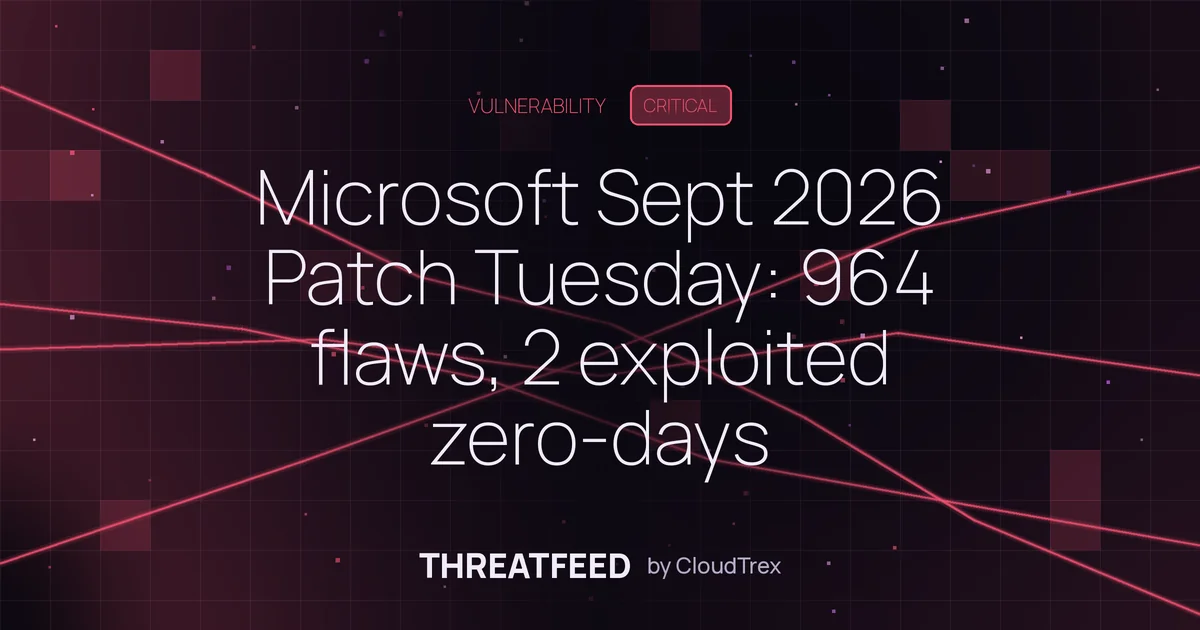
Microsoft products across the ecosystem. 964 vulnerabilities total: 104 critical, 860 important. Two zero-day vulnerabilities are actively exploited in the wild. Specific CVE identifiers, affected product versions, and component details not provided in source material.
Exploitation Status
Active exploitation confirmed for 2 zero-day vulnerabilities. Specific CVE IDs, attack vectors, and exploitation details not disclosed in available information.
Business Impact
Immediate patching required for environments running affected Microsoft products. The volume (964 CVEs) represents significant deployment effort and potential service disruption during maintenance windows. Active zero-day exploitation indicates threat actors have working exploits; delay increases breach risk. Without specific CVE details or affected product lists, organizations cannot perform targeted risk assessment and must treat all Microsoft assets as potentially vulnerable until vendor guidance is reviewed.
Urgency
🔴 Immediate
Recommended Actions
- Review Microsoft Security Response Center (MSRC) September 2026 release notes immediately to identify specific CVE IDs for the 2 actively exploited zero-days
- Prioritize emergency patching for systems affected by the 2 zero-day vulnerabilities within 24 hours, focusing on internet-facing and critical infrastructure
- Deploy the 104 critical-severity patches to production systems within 72 hours following standard change management for high-risk updates
- Schedule patching for the 860 important-severity vulnerabilities within 30 days, prioritizing by asset criticality and exposure
- Monitor security logs and EDR telemetry for indicators of compromise related to the exploited zero-days, correlating with threat intelligence feeds for Microsoft product exploitation
---
# Geopolitical Context
Geopolitical Context
The September 2026 Patch Tuesday release represents an exceptionally large vulnerability disclosure cycle, with 964 addressed flaws marking a significant volume compared to historical norms. The presence of two actively exploited zero-day vulnerabilities underscores the persistent threat environment facing enterprise and government networks globally. While no specific threat actor attribution is provided, the active exploitation of zero-days is consistent with patterns observed from both state-sponsored advanced persistent threat (APT) groups and sophisticated cybercriminal organizations. The scale of this release may reflect accumulated technical debt in Microsoft's product ecosystem or enhanced vulnerability discovery processes. Belgium's mention in the context suggests either regional reporting or specific targeting concerns within European institutions.
State Actor Alignment
No specific state actor attribution is provided in the available information. Active exploitation of zero-day vulnerabilities has historically been associated with intelligence services and state-sponsored groups from Russia, China, North Korea, and Iran, though commercial exploit brokers and cybercriminal syndicates also leverage such capabilities. The targeting patterns and technical indicators of the two exploited vulnerabilities would be necessary to assess potential state linkages. Organizations in NATO member states, including Belgium, routinely face reconnaissance and intrusion attempts from multiple state-aligned threat actors, making timely patching a strategic imperative for critical infrastructure and government networks.
Business Impacty pro region
The vulnerability disclosure has immediate implications for European institutions, particularly given Belgium's role as host to EU and NATO headquarters. Unpatched systems in Brussels-based organizations could present high-value targets for espionage or disruption operations. The 104 critical-severity vulnerabilities require urgent attention across European critical infrastructure sectors, including energy, finance, telecommunications, and government services that rely heavily on Microsoft enterprise products. Globally, the patch cycle affects multinational corporations, cloud service providers, and government agencies across all regions. The two actively exploited zero-days pose immediate risk to organizations that have not yet deployed patches, potentially enabling unauthorized access, data exfiltration, or lateral movement within compromised networks. Coordination between national CERTs and cybersecurity agencies will be essential to ensure rapid deployment across priority sectors.
Forecast
If the two actively exploited zero-days remain unpatched in significant portions of the enterprise landscape, exploitation is likely to intensify over the coming weeks as additional threat actors reverse-engineer the patches to develop weaponized exploits. Organizations that delay patching beyond the standard 30-day window may face elevated risk of compromise, particularly in sectors with high intelligence value or operational technology environments. If the vulnerability volume trend continues in subsequent Patch Tuesday cycles, resource-constrained security teams may struggle with prioritization and testing, potentially leading to prolonged exposure windows. European regulatory bodies may increase scrutiny of patch management practices under NIS2 Directive requirements if exploitation incidents tied to these vulnerabilities affect critical infrastructure. Threat intelligence sharing through platforms like MISP and national CERTs will likely accelerate as indicators of compromise emerge from the zero-day exploitation campaigns.